
Upcycling is hot. Increasingly, designers and vintage shops are transforming discarded clothing into new, unique fashion items. This is not only environmentally friendly but often commercially appealing as well. But there is a legal downside to this sustainable success – especially when well-known brands remain visible in the final product.
In this article, I explain where the risk of trademark infringement arises, how the principle of exhaustion works, and why it often does not provide sufficient protection in upcycling. We can roughly distinguish two forms of upcycling:
1 – Repairing or improving the original product
Think of a vintage coat with a damaged sleeve that is repaired for resale using new fabric or creative patches. The brand remains present on the garment in the same way, and the product retains its original function. This type of repair work typically falls within the exhaustion principle: once a branded product is lawfully placed on the market within the EU market, it may be resold or reused by the purchaser – even if it has been refurbished.
Trademark infringement usually does not arise here, provided the brand is not misused or creates the impression that the repair was carried out by the trademark owner.
2 – Use of a branded component in a new product
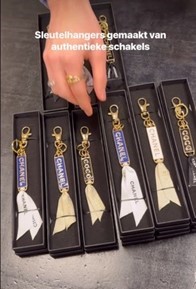
This is where things become more complex. For example, imagine a vintage store selling designer items and having a stock of buttons from old Chanel blazers, which are then repurposed into handmade jewellery.
Although the buttons were originally placed on the market legally, the brand is now used in a completely new product that Chanel never offered as such. This may lead to legal issues, as a trademark owner may object.
The exhaustion principle – and its limitation
As explained above, the exhaustion principle means that the trademark holder no longer has control over the specific product once it has entered the market in the EU. However, this applies only to that same product in its original form.
When a garment is converted into, for instance, jewellery, a new product is created. Often with a more luxurious appearance that benefits from the reputation of the brand from which the original button was taken. Moreover, consumers may believe it is an original Chanel item, especially if the store also sells genuine Chanel jewellery or accessories.
There are several legal avenues that can provide room for sustainable creativity, as Professor Martin Senftleben describes in his article “Fashion Upcycling as Protected Free Speech.” For an upcycled item where third-party brands are (re)used, one can argue that these brands are used purely decoratively or expressively, without implying commercial origin. Additionally, it can be argued that this concerns referential trademark use. Fashion upcyclers make a critical statement about the waste of resources in the fashion industry by offering modified fashion products that feature third-party brands. It could reflect the desire to reduce fashion waste and develop sustainable production and consumer patterns. However, these arguments require that such third-party trademark use falls within honest commercial practices, which is often where such cases fail under EU law.
Sustainable, but think ahead.
Upcycling is a valuable step toward a more circular fashion industry, but current legislation has not yet fully adapted to it. Caution is advised, especially when incorporating luxury brands. Creativity is good – but legal clarity is better.
Do you have an upcycling idea that involves using brand components? Then it’s wise to seek legal advice in advance. That way, your your sustainable creation is less likely to end up in a legal conflict.
Source: Martin Senftleben, Fashion Upcycling as Protected Free Speech in Trademark Law, 31 U. MIA Int’l & Comp. L. Rev. 349